
Ignition Interlock Device Components Explained: How Modern IIDs Work
A complete breakdown of ignition interlock device components—handset, sensors, camera, wiring, and data systems. Learn how modern IIDs work and what each part does.
IID BASICS & HOW IT WORKS
Interlock Near Me
11/24/20252 min read
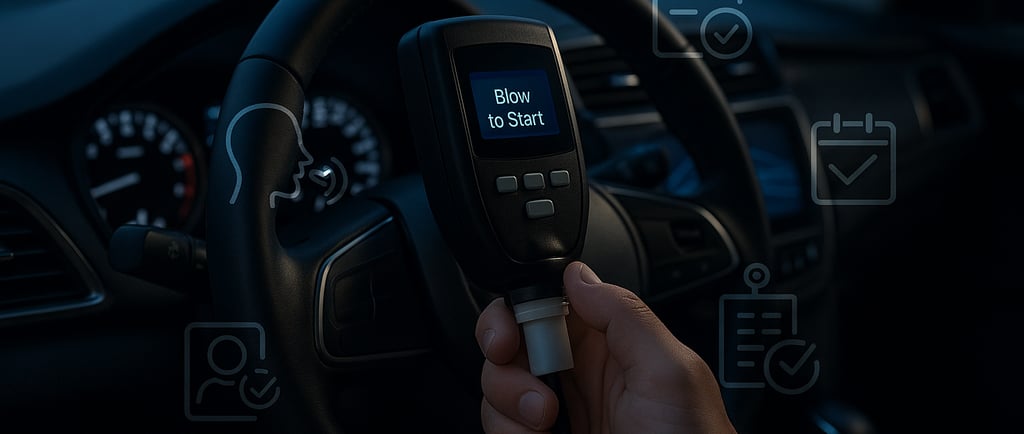
Ignition Interlock Device Components Explained
Ignition interlock devices (IIDs) prevent a vehicle from starting until the driver provides a clean breath sample. While most people see only the handheld mouthpiece, the full system has several components working together to ensure accuracy, security, and legal compliance. Below is a simple explanation of every major part.
1. Handset (Breath Unit)
This is the part the driver blows into.
What it includes:
Mouthpiece – where the sample is provided
Fuel-cell alcohol sensor – detects breath alcohol with high accuracy
Screen – displays messages like “Blow to Start”
LED indicators/buttons – for prompts and alerts
The handset measures your breath alcohol concentration (BrAC) and sends the result to the control module.
2. Fuel-Cell Alcohol Sensor
This is the technology that actually detects alcohol.
How it works:
Breath passes through the sensor
Alcohol triggers an electrochemical reaction
The device converts that reaction into a BrAC reading
Fuel-cell sensors are trusted because they are the same style used in many police breath testers.
3. Control Module (Head Unit)
This is the “brain” of the entire system, usually installed under the dashboard.
Its job:
Stores all test results
Records fails, missed retests, and tamper attempts
Controls whether the vehicle can start
Tracks date, time, and event logs
Everything the driver does is recorded automatically.
4. Camera Unit (Required in Many States)
Most states now require a camera to prevent someone else from blowing into the device.
What the camera records:
A photo during every test
Low-light images at night
The driver’s mouth and device position
Evidence of tampering or substitution
The camera works passively — the driver does nothing extra.
5. Wiring Harness & Ignition Connection
The wiring harness connects the IID to the vehicle.
What it does:
Provides power to the device
Communicates with the ignition system
Blocks the starter during failed tests
Maintains tamper-evident seals
Only a certified technician can install or remove these connections.
6. Data Storage & Reporting System
IIDs must report driver activity to monitoring agencies.
Data includes:
Passed tests
Failed tests
Missed retests
Photos
Tamper warnings
Lockout events
Depending on the model, data is sent via cellular network or downloaded at service appointments.
Why This Matters
Understanding the parts of an interlock device helps drivers:
Avoid violations
Know what the camera sees
Understand how tests are logged
Prepare for installation
Comply with state requirements
The system is designed to be tamper-proof, accurate, and fair.